
Written by:
Isamar Gómez, Pharma GMP Specialist at Klinea Biotech & Pharma Engineering
The pharmaceutical industry is full of technical terms that, to newcomers, may sound complex or even confusing. One such concept is serialization.
Nowadays, it’s common to hear about serialization within the industry, as it has become a key component of traceability and the prevention of counterfeit drugs. However, its implementation was not easy; on the contrary, it has been a journey marked by changes, uncertainty, and many myths.
My first encounter with serialization wasn’t exactly the best. The first time I heard that word, I confused it with “signage.” I remember that conversation about major changes to the packaging lines and the need to train staff in preparation for the arrival of serialization. As a newcomer to the pharmaceutical industry, I thought they were talking about new signs or visual systems inside the plant. I had no idea that I was starting to work in the sector right at one of the most transformative moments the industry has experienced in recent years.
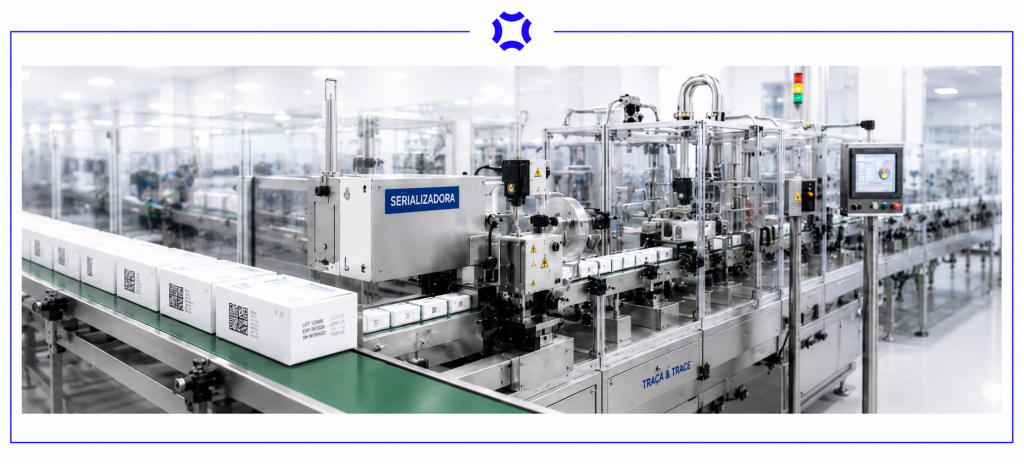
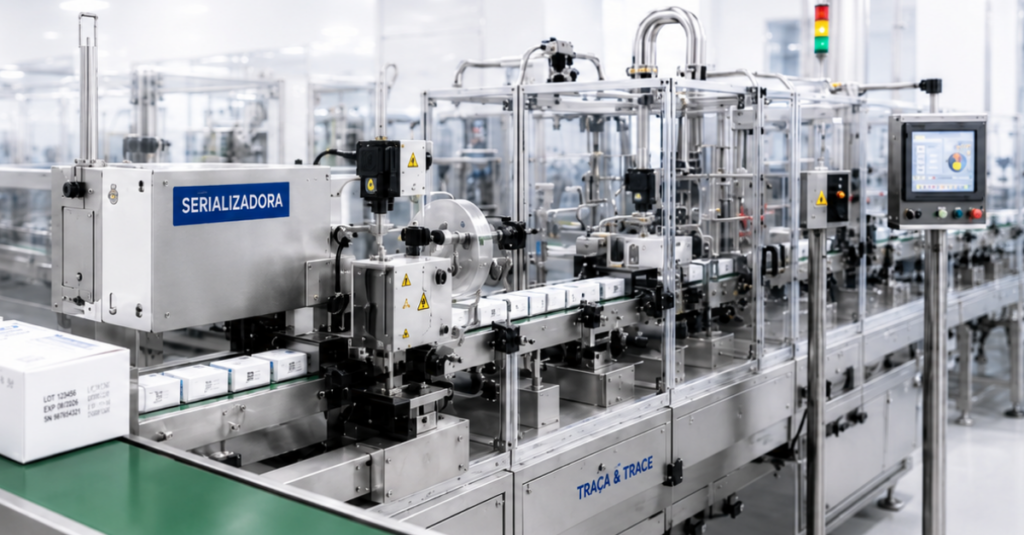
Figure 1. Packaging line with serialization machines
The Year Everything Was Changing
I started working in the pharmaceutical industry just as many companies were adapting—or in the process of adapting—their packaging lines to implement serialization. At the time, I had absolutely no idea of the impact of what was happening. It was a time of constant change: the lines were being modified to incorporate serialization equipment, and the associated hardware and new software had to be validated afterward. It wasn’t simply a matter of adding a printer or installing another piece of equipment on the line; it was a complete redefinition of how we worked.
Operators, maintenance staff, and technical personnel received specific training, while all departments worked around the clock to meet the implementation deadline. And, while all that was happening, many of us were trying to understand what serialization really meant. Over time, I came to realize that I was participating in a profound change in the packaging of medications, designed with a single goal in mind: to ensure patient safety.
What exactly is serialization?
Although it seems like a common term today, serialization continues to raise questions outside the industry. In simple terms, it involves assigning a unique, non-repeating code to each package of medication. This code makes it possible to individually identify each package and verify its authenticity throughout the entire supply chain. In other words, two seemingly identical packages will never have the same identity.
These codes typically include four essential pieces of information:
- Unique serial number.
- Product code.
- Lot number.
- Expiration date.
All of this information is encoded in a Data Matrix code that is automatically read by the vision systems of serialization machines, pharmacy computer systems, and even the cameras on our cell phones. The main goal is clear: to prevent counterfeit drugs from entering the legal market.
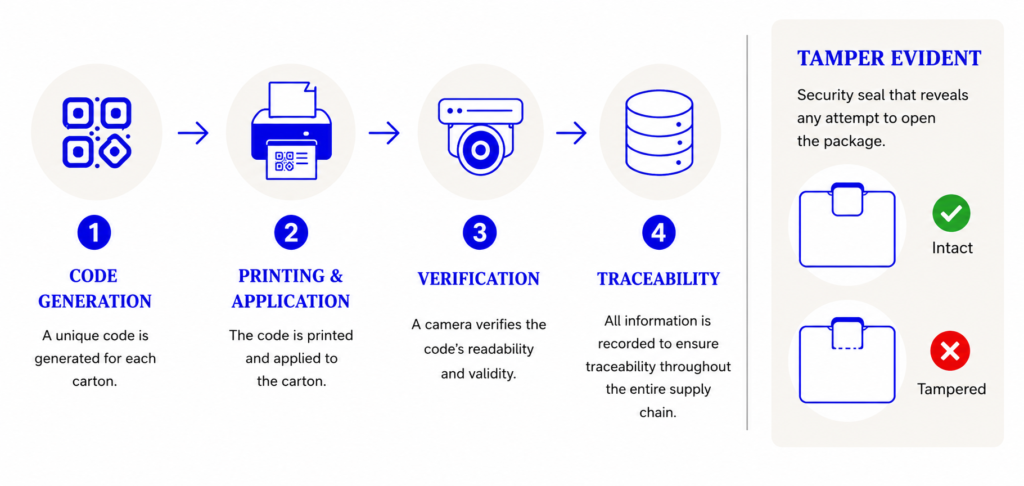
Figure 2. Step-by-Step Guide to Serialization
The big myth: “All you have to do is put a code in the case”
One of the biggest myths about serialization is the idea that it simply involved printing a code on the package. From the outside, many people assumed the change would be minimal. After all, batch numbers and dates had already been printed on the packages for years. How hard could it be to add another code?
The reality was completely different. Serialization required the transformation of entire packaging lines. It called for serialization machines, new software, validation protocols, new production guidelines, and large-scale data management to store both the serial numbers of the medications and all product master data.
Furthermore, any error could lead to rejections, production stoppages, or even regulatory issues. What seemed like a simple print job ended up becoming another step toward the technological revolution.
Resistance to Change
As with many industrial transformations, serialization also met with resistance. Some people thought it was unnecessary or that it would only add to their workload. Many workers felt uncertain in the face of so many changes, especially since they had been working the same way their entire lives and this way of working was about to change.
With the advent of serialization, packaging lines became much more digitized environments. Operators began interacting with new screens, alarms, and increasingly complex equipment. It was no longer enough for the package to be properly sealed or correctly labeled; now, each unit had to have its own unique identifier and a“tamper-evident” seal to prove that the package had not been tampered with.
Learning from the Inside Out
Being part of that process was an experience that I now value immensely: it’s not every day that you get to be involved in the implementation of new software or equipment in the pharmaceutical industry. At first, everything seemed chaotic. We were inundated with constant training sessions, new procedures, and technical acronyms we were hearing for the first time: IQ, OQ, and PQ validations, GTIN, data matrix…
I remember the continuous testing that resulted in a large number of rejected cases, incorrect readings of variable data, unexpected alarms that no one knew how to resolve, and line stoppages that tested the patience of the production team. It was clear that no one had a firm grasp of the process at first; we were all learning.
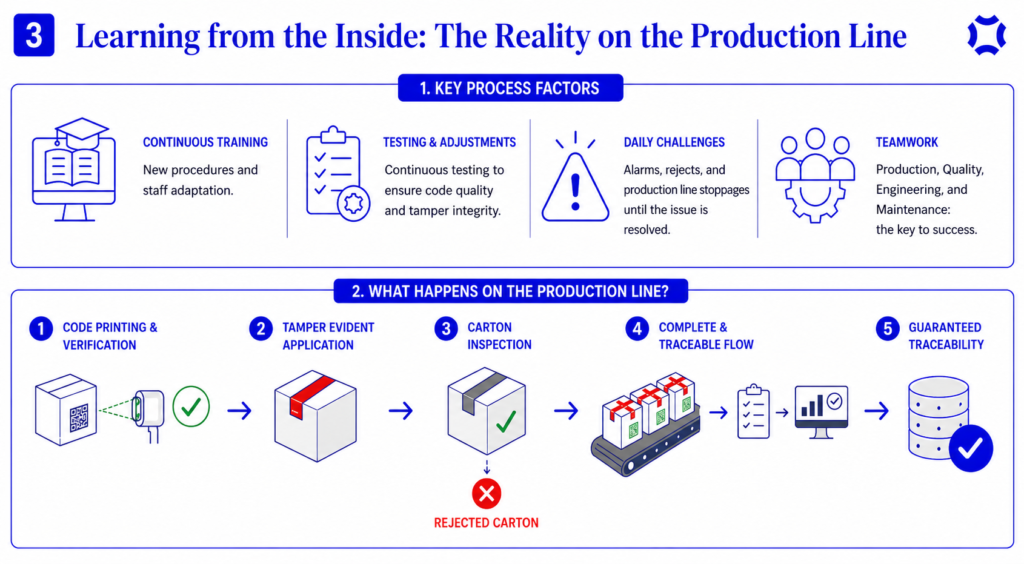
Figure 3: Learning from the Inside: Reality on the Front Lines
And that is precisely where another of the great myths about serialization disappears: the idea that technology automatically solves everything. There is a perception that serialization is a purely technological process, but the reality is that it depends heavily on people.
Serialization machines can print codes, verify readings, and apply tamper-evident seals to cases, and the systems that support these machines can store millions of data points.
But behind all of that, there are always people—such as maintenance technicians adjusting serialization machines, operators supervising production lines, engineers troubleshooting problems, or production technicians modifying procedures, guidelines, and so on—who are adapting to the new way of working. Without that human coordination, the system simply doesn’t work.
In fact, the challenge wasn’t limited to manufacturing plants; it extended to pharmacies, where staff had to adapt their daily routines to verify and “deactivate” each package before dispensing it to the patient.
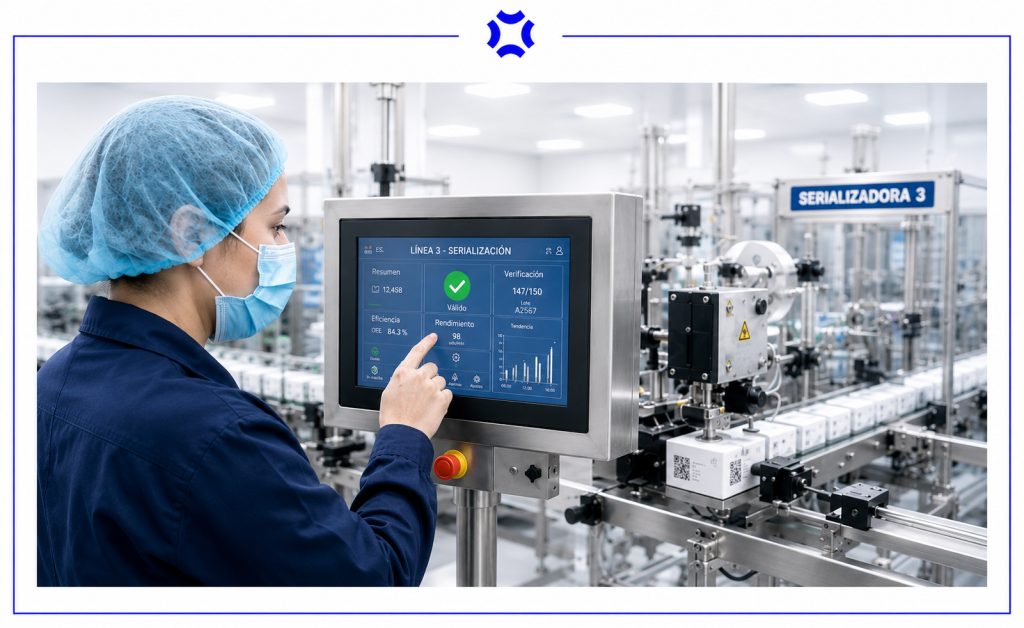
Figure 4: Serialization Control at the Plant
The Fear of Making a Mistake
Serialization also introduced a new level of pressure. With serialization, any error was digitally recorded:
- An incorrect reading from the vision system
- A duplicate code in the database
- A connection problem.
Everything could affect product traceability. That naturally caused some fear at first. Many workers felt they were entering completely uncharted territory where even the smallest mistake could have significant consequences. However, over time, people began to gain confidence. What once seemed impossible eventually became part of their daily routine, demonstrating the sector’s remarkable ability to adapt.
The real goal: to protect the patient
Sometimes, caught up in the daily routine, it’s easy to lose sight of the ultimate purpose of certain processes. Serialization wasn’t created to complicate work at pharmaceutical plants. It was created to protect patients.
Counterfeit medicines are a critical global problem. Today, there are illegal networks capable of introducing counterfeit products into seemingly secure supply chains. These medicines may not contain any active ingredient, may have incorrect dosages, or may have been stored improperly. Serialization provides an additional safeguard against this risk, since, thanks to unique codes, it is possible to verify whether a medication actually comes from the authorized manufacturer and whether it has followed the proper path through the supply chain.
Once you understand this, you begin to see serialization from a different perspective. It is no longer simply a regulatory requirement. It is a safety tool for patients who need these medications.
Another myth: “Serialization solved all the problems”
Although serialization has been a huge step forward, it did not magically solve all the problems. It also introduced new challenges. Data management became much more complex. Companies had to invest large sums of money. Technological dependence grew. And new issues arose related to software, connectivity, and the operation of serialization machines. Many companies discovered that qualifying and implementing the equipment was only the first step in an ongoing effort that requires daily attention.
The Invisible Transformation
The most interesting thing about serialization is that most end consumers never even noticed the huge change that took place behind the scenes. For most people, the medicine packages remained virtually the same. They might have noticed a small black square filled with dots on one side, but that was it.
Behind that Data Matrix code lies a massive infrastructure: millions of hours of engineering, massive investments, team training, organizational restructuring, and an immense learning curve for the people involved. It was a silent revolution.
My Personal Journey with Serialization
When I think back to that first time I confused serialization with signaling, I can’t help but smile. At the time, I was completely oblivious to what it all meant. I didn’t understand the complexity, nor could I have imagined the amount of work it would entail. However, going through that phase allowed me to grow professionally, understand the value of front-line work, and see how departments as diverse as Production, Quality Assurance, and Engineering coexist and interact. I learned that behind every regulatory change there’s an extraordinary team of people working hard to make sure everything runs smoothly.
The Future of Traceability
Today, serialization is no longer a novelty—it has become the norm. And that is the most interesting thing about any major transformation: at first, it’s scary and turns everything upside down, but eventually it becomes normal.
However, this is just the beginning. The future of traceability is already pointing toward mandatory aggregation in an increasing number of international markets, and toward a hyperconnected logistics chain powered by artificial intelligence, advanced automation, and real-time data analysis. Each new technology will bring its own share of enthusiasm, doubts, and learning curves.
Conclusion
Serialization has been a game-changer for the pharmaceutical industry, even though this change has often gone unnoticed outside the sector. Behind the codes printed on each package lies a vast history of technological adaptation, human effort, and industrial transformation. There are also many myths—such as the idea that it was simple, that it depended solely on machines, or that it would automatically solve all problems. The reality was much more complex, but also much more interesting.
Having started working in the pharmaceutical industry right during that period allowed me to experience the change from the inside. I saw how production lines were set up, how staff were trained, and how everyone tried to understand and adapt. And although at first I didn’t even know what the word “serialization” meant, over time I came to understand that I was participating in a process of change within the pharmaceutical industry. A change that is now part of the industry’s normal operations, but which at the time posed a real challenge for thousands of professionals.
Serialization is not just a technical system; it represents an industry’s ability to evolve, learn, and continue moving forward with one fundamental goal: ensuring patient safety.
Sources and Documentation
This article combines firsthand professional experience in pharmaceutical manufacturing with technical and regulatory documentation related to the implementation of serialization systems in the European pharmaceutical industry.