Written by:
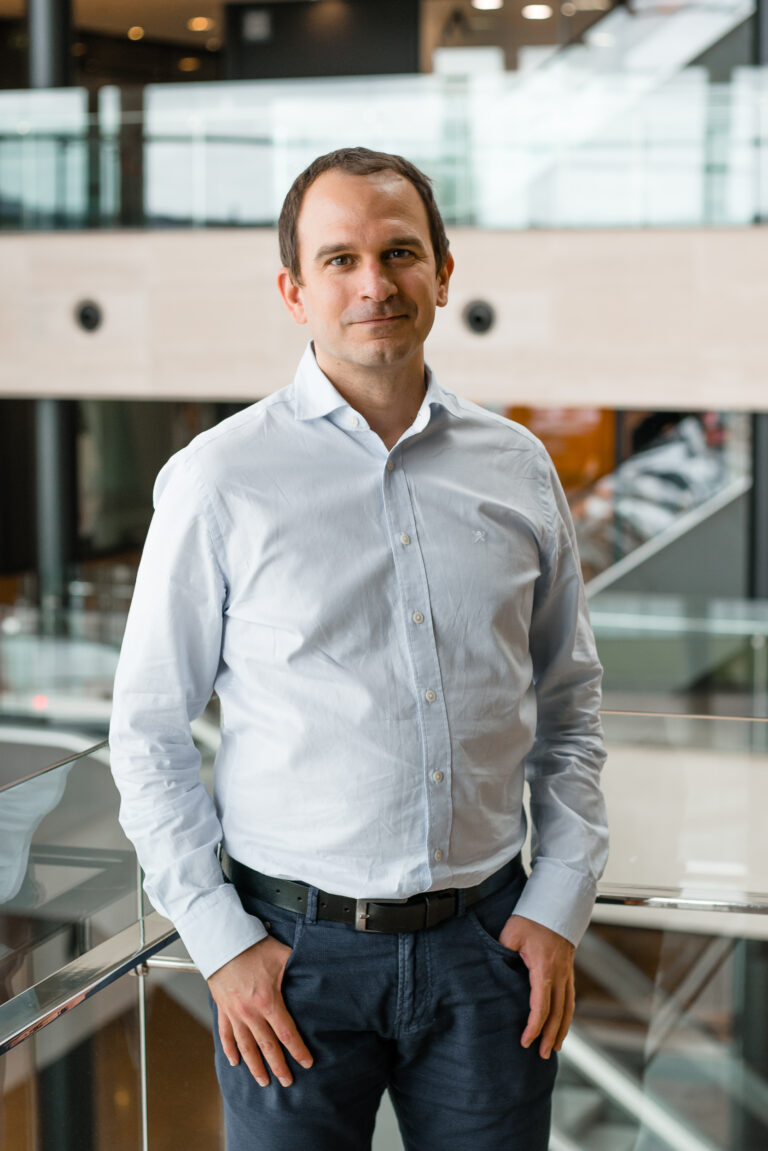
Jordi Gibert Amat, Head of the Biotechnology Unit at Klinea Biotech & Pharma Engineering.
At events such as BIOSPAIN , we tend to talk a lot about innovation. And with good reason. We have excellent research groups, startups capable of developing disruptive technologies, and an increasingly mature biotech ecosystem. However, if we look at what happens to many of these innovations a few years later, the reality is that only a small fraction makes it to market.
It’s not a matter of science. In many cases, science works. The challenge arises when it comes to manufacturing the product in a reproducible manner, complying with regulatory requirements, scaling up the process, controlling production costs, or ensuring a steady supply once the product transitions from a research project to an industrial reality.
It is precisely at this point that engineering plays a fundamental role. And perhaps this is where it’s worth challenging a fairly widespread notion in our industry: engineering doesn’t begin when it’s time to build a plant. It begins much earlier. It begins when a company makes decisions that will determine whether its technology can be manufactured viably five years down the road.
Over the years, we have seen technically brilliant projects encounter significant difficulties during scaling. We’ve also seen seemingly simple solutions evolve successfully because, from the very beginning, someone asked the right questions: How will it be manufactured? What will the production cost be? What regulatory requirements will need to be met? Will it be possible to increase capacity when demand arises?
These questions are rarely the most appealing ones during the early stages of development, but they often make the difference between a promising technology and a commercial product.
One of the biggest challenges is, in fact, scaling. In biotechnology, scaling up from the laboratory to industrial production is never simply a matter of increasing size. A process that works perfectly in a small bioreactor may behave completely differently when scaled up a hundred- or thousand-fold. Limitations arise related to oxygen transfer, mixing, temperature, purification, or process times. This phenomenon is well known to any professional in the sector and is one of the reasons why many technologies encounter difficulties when moving beyond the R&D environment.
For this reason, scalability should be part of the conversation from the very early stages. Not because you have to design a facility from day one, but because certain decisions can greatly facilitate a company’s future growth or, conversely, become constraints that are difficult to correct.
Something similar applies to GMP compliance. It is often said that GMPs are a concern for advanced stages of development. However, anyone who has been involved in transferring a process to a clinical or commercial setting knows that many of the critical decisions are made much earlier. The definition of the process, the control strategy, the traceability of materials, and an understanding of critical quality attributes ultimately shape the regulatory path.
When quality and engineering are built in from the start, projects tend to move forward more smoothly and with less risk.
Another less visible but equally important aspect is the role of engineering in helping to overcome the well-known “valleys of death” in biotechnology.
We traditionally associate this concept with financing, but the reality is that the problem is often not solely financial. Investors, industry partners, or potential licensees want to understand how the product will be manufactured, how much it will cost to produce, and to what extent the process is robust and scalable. When these questions go unanswered, the perception of risk increases significantly.
In this regard, engineering brings something very valuable to the table: industrial credibility. It helps translate a scientific hypothesis into an implementation plan. It makes it possible to plan for investments, assess production capacity, design scaling strategies, and reduce uncertainties. Ultimately, it helps demonstrate that a technology not only works but can also generate a real impact.
And perhaps that is the main point to consider. Biotechnology needs excellent science. It will always need it. But for that science to reach patients, hospitals, farmers, or consumers, it also needs processes, facilities, regulation, operations, and manufacturing. It needs engineering.
Because, in the end, the success of an innovation isn’t measured by what happens in a laboratory. It’s measured by its ability to reach society. And along that journey, engineering ceases to be merely a technical support and becomes a true engine of transformation.