
Written by:
Jordi Gibert, Head of the Biotechnology Business Unit at Klinea Biotech & Pharma Engineering.
Andrea Jordà tubio, Bioprocessing project engineer at Klinea Biotech & Pharma Engineering
Ivan Borrego, Independent consultant in the cosmetics sector
For decades, the cosmetics industry has been associated with relatively standardized processes: emulsifying formulations, mixing, heating, cooling and filling under controlled hygienic conditions. However, this paradigm is changing rapidly. Contemporary cosmetics, driven by biotechnology and the demand for more effective, sustainable and differentiated products, are incorporating assets of high technological value that just a few years ago were exclusive to the pharmaceutical or biotechnological field.
Recombinant proteins, functional peptides, fermentation-derived actives, complex cell extracts or plant stem cells are now part of the ingredient portfolio of many brands. This evolution, which represents an enormous opportunity for innovation, also entails a qualitative leap in industrial complexity. The challenge is no longer just to formulate these active ingredients, but to manufacture them in a robust, reproducible, scalable and competitive way. And it is precisely at this point that many initiatives encounter their main difficulties.
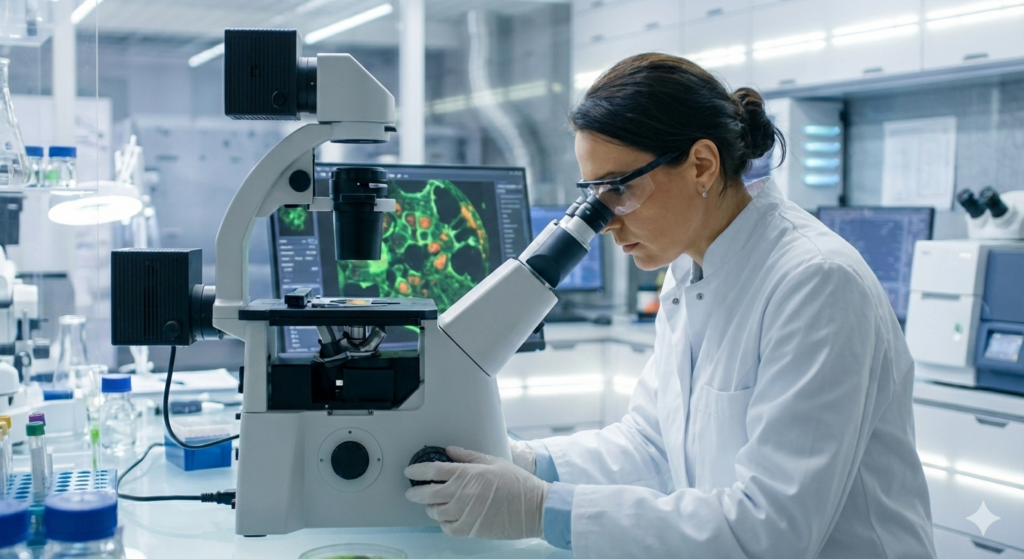
Figure 1. Research of complex biotechnological assets in the laboratory, the starting point of a process that should later be scaled up to a plant with guarantees.
When innovation moves faster than the factory floor
One of the most common mismatches in advanced cosmetics projects is between the speed of R&D and the reality of the industrial plant. Scientific teams make rapid progress in developing the active ingredient, validating its efficacy and defining the product concept, while thinking about how to produce it on an industrial scale is postponed for too long.
Often, engineering enters the project when the process is already “closed” from the scientific point of view, and the plant must be adapted a posteriori to decisions that critically condition the industrial design. The result can be an oversized facility or one that is unable to consistently reproduce the process developed in the laboratory or pilot plant.
This reactive approach may work in conventional cosmetics, but it is not viable when working with, for example, complex biotechnological processes, where sterility, flow segregation or cleanliness are critical quality factors.
Why manufacturing advanced assets is not “more of the same”.
Manufacturing a classic cosmetic emulsion has nothing to do with producing a protein, a peptide or an active ingredient obtained by fermentation. The latter involve very different unit operations and technical requirements: cell or microbial cultures, strict control of critical parameters, clarification and purification steps, handling of sensitive materials, risks of cross-contamination and specific cleaning and validation needs.
Moreover, these processes not only condition the equipment: they define the plant design (classification of areas, flow of people and materials, ventilation systems or expansion strategy). Trying to fit this type of production in facilities designed for traditional cosmetics usually leads to operational inefficiencies, high costs and growth limitations.
For this reason, the boundary between cosmetics, biotechnology and pharmaceuticals is becoming increasingly blurred at the industrial level, even if the regulatory frameworks are different. Engineering must understand this convergence and translate it into a constructible and fully functional industrial design (layout, flows, technical documentation, selection of equipment and sizing of installations), adapted to the cosmetic context, without oversizing or copying foreign models.
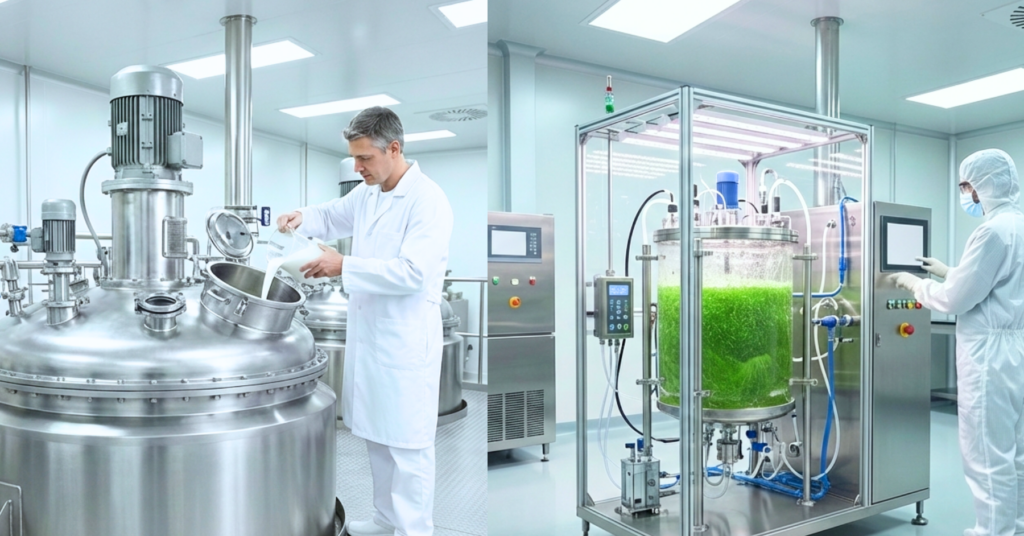
Figure 2. From conventional blending to cultivation and purification processes, reflecting the increasing complexity of cosmetic production.
The strategic value of the pre-engineering project
In this context, the preliminary engineering project is no longer a mere technical formality but a strategic tool. Correctly defining the plant concept before construction is key to ensuring the medium and long-term viability of the project.
This work includes the definition of the layout and flows, the design of classified areas, the strategy for critical services and the planning of future expansions; it involves thinking about the facility from the logic of the process, not from standard solutions, and is materialized in executive documentation (plans, specifications and installation criteria) that makes the project truly constructible. In addition, it is increasingly relevant to integrate, from the design phase, sustainability and digitalization criteria. In Klinea, when the project requires it, we accompany the client during the execution of the work to ensure compliance with the qualities, deadlines and costs defined in the design phase.
Good conceptual engineering is not limited to optimizing the initial investment. Its value lies in designing an operable plant: flexible to product changes, scalable and with operating costs under control. In advanced cosmetics, these variables make the difference between a profitable asset and a permanent bottleneck.
Cleanrooms as an example of process-driven design
Cleanroom design is one of the areas where this philosophy is most evident. In many cosmetic projects, cleanrooms are conceived by inertia, replicating pharmaceutical schemes or applying “default” classifications without a thorough analysis of the actual process.
However, the needs of a fermentation line, a purification step or a cosmetic aseptic filling are not equivalent to those of a sterile drug. The classification level, differential pressure, air flow patterns or segregation requirements must respond exactly to the risks of the process, no more and no less.
A design without this reflection leads to facilities that are more complex and costly to operate than necessary. On the contrary, a process-oriented approach adjusts the design to what is strictly necessary, ensuring quality and optimizing investment and operation.
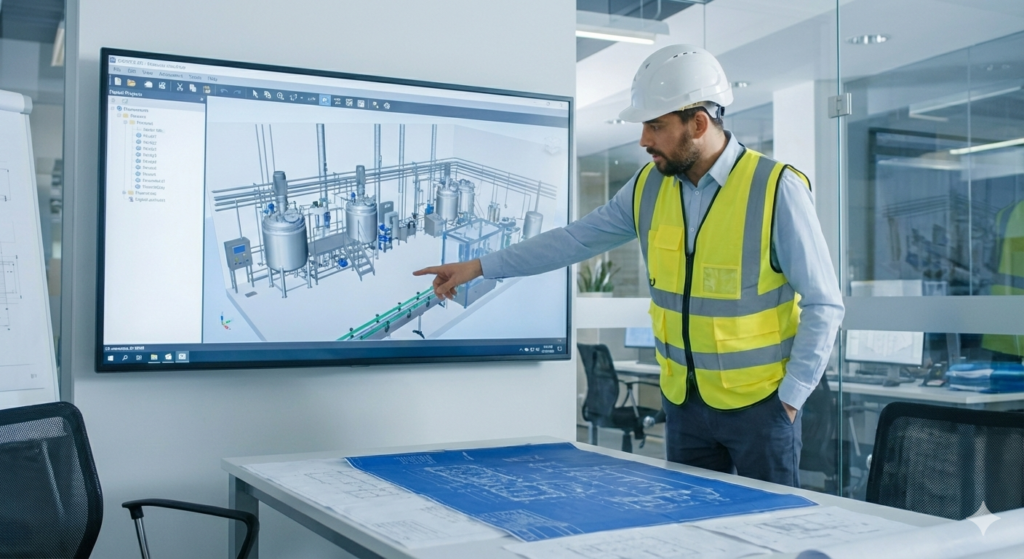
Figure 3. Process-oriented conceptual plant design, where the foundations that will define the future operation of the facility are established.
Designing before building: the key to success
Advanced cosmetics is at a turning point. Science offers extraordinary possibilities, but their industrial materialization requires a change of mentality: a promising asset is no longer enough; it is necessary to think from the outset about how it will be manufactured.
In many cases, the difference between an innovation that remains in the laboratory and a viable industrial project is decided long before the first stone is laid: in the design phase, when engineering is integrated early and strategically in the development of the project.
Understanding the process, anticipating its evolution and translating it into a flexible, efficient and scalable plant is today one of the great challenges – and opportunities – of the cosmetics industry of the future. Because, ultimately, innovation only generates value when it can be produced consistently.
In advanced cosmetics, the competitive advantage no longer lies solely in the asset, but in the ability to intelligently design its manufacture from the outset.
For further information on plant design for advanced cosmetics, please contact our team at klinea@klinea.eu.
Bibliography
1. Biopharmaceuticals Market Size, Share & Industry, By Type, By Application, By Distribution Channel and Regional Forecast 2025-2032; Fortune Business Insights; 2025
2. Pharmaceutical Drugs Global Market Report 2025; The Business Research Company; 2026
3. Biopharmaceuticals from microorganism: from production to purification: Angela Faustino Jozala et al.; Brazilian Journal of Microbiology; 2016.
4. Whitepaper: Advancements in microbial manufacturing of biopharmaceuticals; Boehringer Ingelheim; 2024
5. Microbial protein cell factories fight back?; Lukas A. Rettenbacher; Trends in Biotechnology; 2022
6. Production of Biopharmaceuticals in E. coli: Current Scenario and Future Perspectives; Mohammed N. Baeshen et al.; Journal and Microbiology and Biotechnology; 2015.
7. Yeast as Biopharmaceutical Production Platforms; Natalja Kulagina et al.; Frontiers in Fungal Biology; 2021.
8. Evolving Paradigms of Recombinant Protein Production in Pharmaceutical Industry: A Rigorous Review; Achuth Jayakrishnan et alSci; 2024